How Page Speed & Load Time Impacts Conversions
Slow sites kill conversions. Here's what happens when users wait too long for your pages to load, and why page speed should be your top priority.
A client once told me their e-commerce conversion rate dropped 40% over three months. Revenue was down. Bounce rate was up. They'd tried A/B testing the checkout flow, changing CTAs, adjusting pricing. Nothing worked.
I checked their site on my phone. The homepage took 8 seconds to load on 4G. Eight seconds. Nobody waits that long anymore.
We optimized images, lazy-loaded offscreen content, and cut unnecessary JavaScript. Load time dropped to 2 seconds. Conversion rate climbed back up within two weeks.
Page speed isn't just a technical metric. It's money on the table.
Mobile Users Won't Wait
Over 50% of web traffic comes from mobile devices. Most of those users are on spotty connections - commuting on the subway, sitting in a coffee shop, walking between meetings.
Your fancy hero animation? They don't see it. Your 187 tracking scripts? Slowing everything down. Your high-res product photos? Taking 6 seconds to load.
Users don't care about your technical stack or your marketing pixels. They want information fast, and they'll bounce if you waste their time.
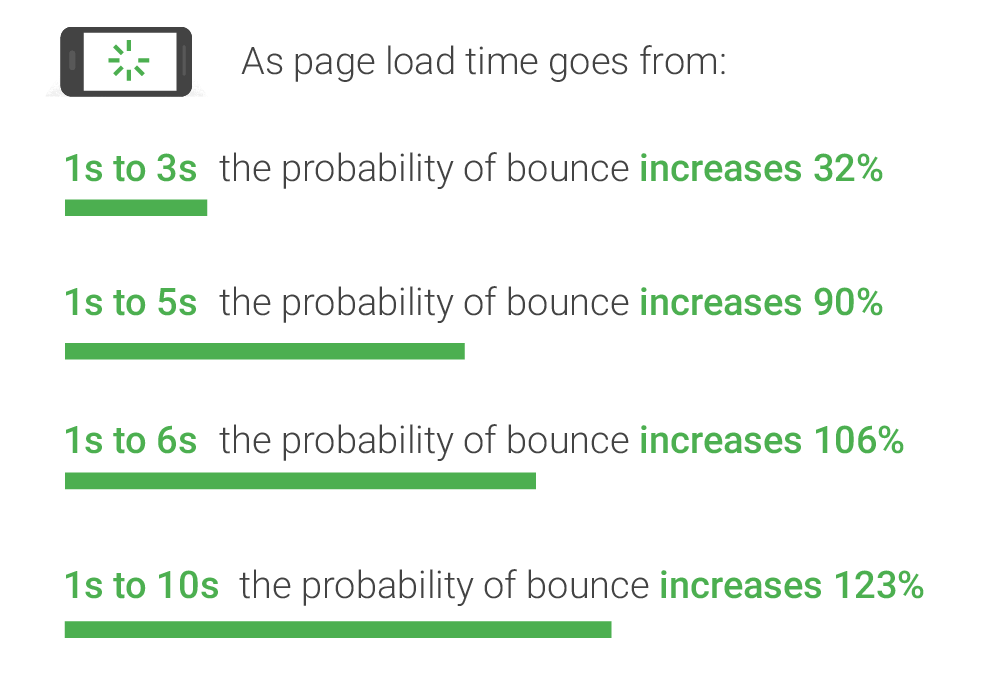
The Business Impact Is Real
Google made page speed a ranking factor years ago. Slow sites rank worse in search results. That means less organic traffic.
But the real killer is bounce rate. A 1-second delay in page load can cause:
- 7% reduction in conversions (source: various studies)
- 11% fewer page views
- 16% decrease in customer satisfaction
I've seen this play out on real projects. An e-commerce site I consulted for had a 5-second load time. After optimization dropped it to 1.8 seconds, their conversion rate improved by 22%. Same products, same prices, same design. Just faster.
Cost-Per-Acquisition Goes Up
If you're running paid ads, slow page speed is burning your budget. Users click your ad, wait for the page to load, get impatient, and leave. You paid for that click. You got nothing.
One client was spending $15,000/month on Google Ads. Their landing pages took 6 seconds to load. Bounce rate was 68%. After we optimized for speed (2-second load time), bounce rate dropped to 42%. CPA went from $87 to $54. Same ad spend, 60% more conversions.
Page speed optimization paid for itself in three days.
Desktop vs Mobile - Different Strategies
Desktop users usually have faster connections. They can handle larger assets, more JavaScript, higher-resolution images.
Mobile users need aggressive optimization:
- Serve smaller images (use
srcsetfor responsive images) - Lazy load everything below the fold
- Defer non-critical JavaScript
- Minimize third-party scripts
I use different optimization strategies depending on the device. Desktop gets the full experience. Mobile gets a streamlined, fast-loading version. Both convert, but mobile optimization is critical.
Check out my detailed guide on performance optimization strategies for specific techniques.
The Numbers Don't Lie
Here's what happened when I optimized page speed on three different projects:
E-commerce site:
- Load time: 5.2s → 1.8s
- Conversion rate: +22%
- Revenue: +18% (same traffic volume)
SaaS landing page:
- Load time: 4.1s → 1.3s
- Bounce rate: 62% → 38%
- Sign-ups: +31%
Content site:
- Load time: 3.8s → 1.6s
- Page views per session: +27%
- Ad revenue: +19%
Every project saw significant improvements. The pattern is consistent: faster pages = better business metrics.
Start Measuring Today
Use Google PageSpeed Insights or Lighthouse to audit your site. You'll get a performance score and specific recommendations.
Don't try to fix everything at once. Focus on the biggest wins:
- Optimize images - Usually the largest assets (read my image optimization guide)
- Reduce JavaScript - Defer non-critical scripts
- Enable caching - Let browsers cache static assets
- Use a CDN - Serve assets from servers close to users
Page speed isn't sexy. It doesn't look impressive in design reviews. But it directly impacts your bottom line.
Your users won't compliment you on your fast site. They'll just stick around longer and convert more often. That's worth the effort.